
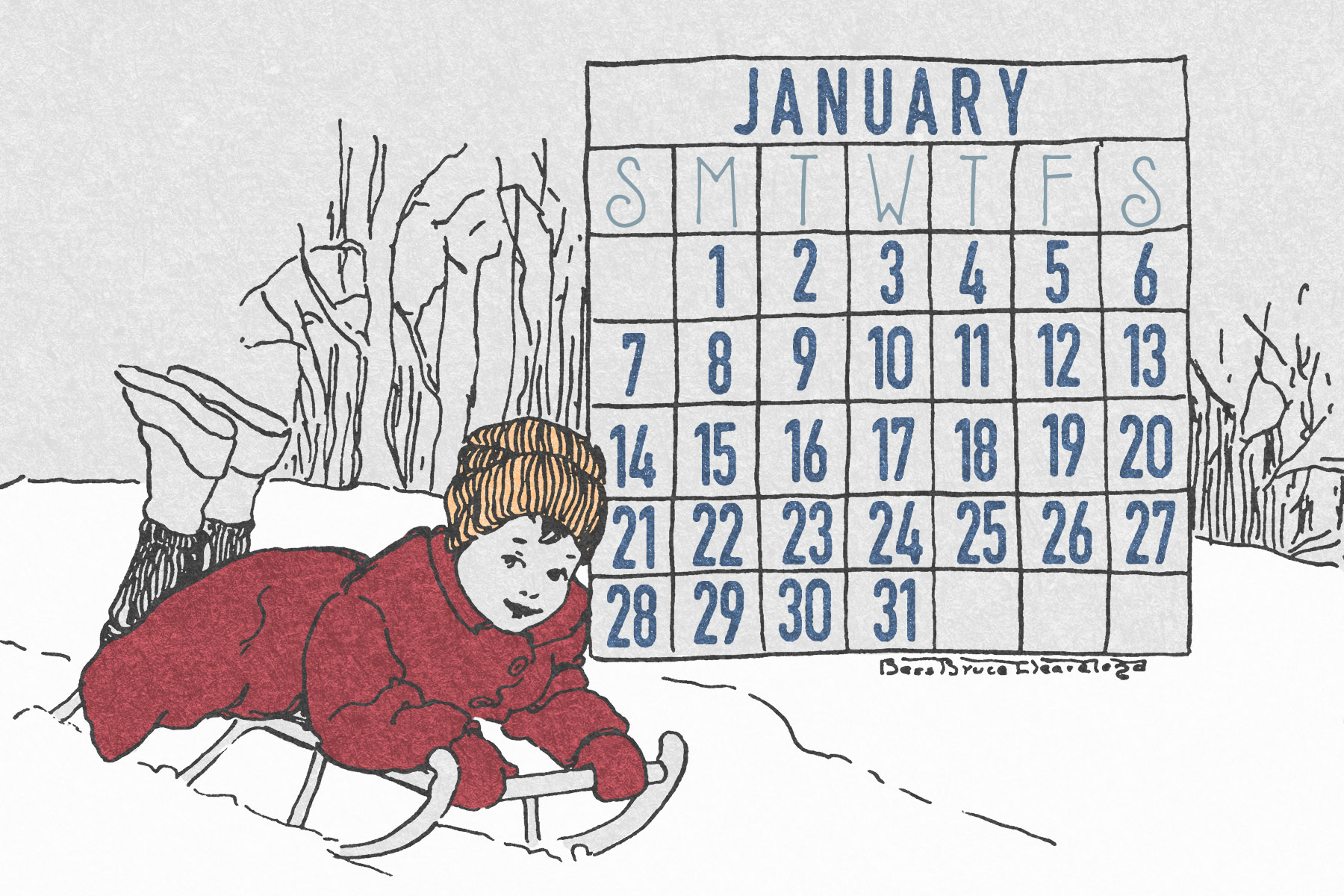
I couldn’t resist publishing the following little “lingo”, as it’s called, from an 1887 Almanac. Someone long ago devised a special way to find the first day of the month. This dates before 1837 according to the narrative, so it is quite old and very interesting. I haven’t run across this one before. So once again its published so it may not be “lost”.
“This is the way that an old timer manages to keep the days of the week that months open with. It will be found correct and interesting to such people who have a memory for such things:
‘What day of the week did January come in on?’ asked Grandpa Martin. ‘If you can tell that, I can tell you the day that any month will come in on, by help of a little lingo I learned from my father when I was a boy. Monday, did you say?’ and grandpa held up his hands preparatory to counting his fingers. Now, April is the month; let us see: ‘At Dover dwelt George Brown, Esq, good Christopher French and David Frier.’ We go by the first letters of these words – 1, 2, 3, 4 – At Dover dwelt George, – G is the letter we want, and it is the seventh letter of the alphabet. January came in on Monday, you say. Monday, Tuesday, Wednesday, Thursday, Friday, Saturday, Sunday – seven; April comes in on Sunday. Take February- second month- at Dover. D is the letter, and fourth in the alphabet. Take Monday again as the starting point – Monday, one; Tuesday, two; Wednesday, three; Thursday, four; February comes in on Thursday.’ ‘If you make no mistakes in using the rule, it will give you the answer every time. Leap year requires the addition of one day for the last ten months, to allow for the additional day, the 29th of February. ‘I never knew anybody outside of my father’s family, ‘ continued grandpa, ‘who knew this little lingo and how to use it. He taught it to his children, and I have tried to teach it to mine, but they seem to forget it, and I am afraid it will get lost. When father used to go to presbytery, fifty years ago, it often happened that a question of dates and their relation to days would come up, and no almanac at hand; in fact, the question might be as to some day of the next years; but almanac or not, my father could always find the fact wanted with just the little key of the first day of the years.'”